Thursday, February 16, 2012

Modular Classroom Buildings - Tips for Buyers

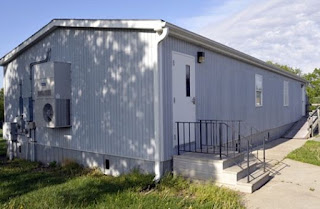
Portable classroom suppliers offer a variety of modular buildings for use as classrooms, daycare centers, churches and office space.  If you are searching for a supplier consider the following questions during your initial meetings and calls:
  1.  Does the supplier offer leasing, lease purchase and purchase options?
  2. Does the supplier have the resources to provide you with a new, custom designed modular building or a used structure?
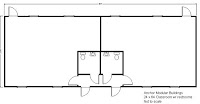
  3.  Is the supplier willing to make changes to the floor plan to meet your specific occupancy needs?
  4. Can the supplier assist with building permits?
  5.  Can the supplier provide services such as delivery, installation, and the assembly of a handicap ramp and or steps for accessibility?


Try www.imodular.com as a resource for locating suppliers close to the address where you will be installing the relocatable, portable classroom. This service also helps you get the most competitive price.

Don’t forget that having a supplier with a proven track record and with some history at the local building and safety department is a huge advantage when it comes to obtaining permits for your modular school project.

Tuesday, February 07, 2012

School Facilities Cut Energy

Students Cut Energy Use By Up to 17% in National Energy Conservation Challenge

Schools Showcase Energy-Saving Technologies and Positive Behavior Changes


New York, NY –  Students across the U.S. are reporting impressive energy savings on their school campuses during the third week of meter readings for the 2012 national Green Cup Challenge® (GCC), with some schools reporting cuts as high as 17%.

"This is extremely positive news for America, which makes up just 5% of the world's population but consumes 24% of the world's energy," says Peg Watson, Founder and President of the Green Schools Alliance (GSA). The GSA sponsors the GCC, which is now in its fifth year; 116 GCC schools in 22 states are competing to reduce their electricity consumption during peak winter energy usage, January 18 to February 15.

Preventable energy waste costs Americans hundreds of billions of dollars a year and studies have shown that most Americans continue to live in denial about their energy consumption.  But students are turning that around.

"From California to Florida, students and school campuses are modeling technologies and behaviors that save energy, money and the environment during the GCC and beyond," says GCC Program Director Katy Perry.

Energy-saving strategies range from the simple and low-tech to the high-tech.

The Latin School of Chicago has seen an 8.2% reduction in its energy consumption so far. The independent K-12 school has quietly made big investments in renewable energy and campus-wide efficiencies that are paying off in many ways, thanks in large part to Peter Brown, the school's Director of Facilities and Operations.

"We're seeing a savings of around $45,000 per year for our campus," says Brown, who last year installed solar PV panels on Latin's Middle School building, along with a new bird friendly wind turbine and a solar hot water heating system.  The Upper School's roof went solar in 2009.  All lights in the Middle School were retrofitted with motion sensors and dimmable ballasts. AV management software shuts down systems at night, and environmental monitoring software tracks and promotes awareness about sustainability. 


With the annual cost savings, Brown expects to see a return on Latin's investments in about ten years; but their value is not just economic.  A public website page is tracking how many pounds of carbon dioxide the school has kept out of the atmosphere by using solar energy, and the educational opportunities surrounding these choices are infinite.

"By making ethical decisions about how we use energy throughout our facilities, we can use our campus as a classroom for our students," says Brown.  

Indeed, Latin's two green roofs - atop the Middle School (5,500 sq. ft.) and the Upper School (1,200 sq. ft.) – have become virtual science and engineering laboratories.  On a hot day, using infrared thermometers, students have observed that the temperature on a traditional roof is often 30 degrees Fahrenheit higher than a green roof. "This is a great opportunity for students to see how a green roof can help reduce cooling costs," says Brown.

Saint Paul's, an independent Pre-K – 8 school in Clearwater, Florida has been using air conditioning (A/C) instead of heat this winter, due to unusually warm temperatures. But it has nonetheless managed to reduce its electricity consumption by 17% during the GCC. A/Cs have been set at 74° F, up from 72° F.  Since the last GCC, Dean Ledee, Saint Paul's Director of Facilities and a member of the staff Green Team, says he has replaced up to six old A/C units with more efficient Energy Star models. And as exterior lights blew out, he replaced them with LEDs. "Despite the recent 3% electricity rate increase, we haven't felt it," says Ledee, who gives credit to the teachers and students for being conscious about their electricity use. "We've really focused on turning lights off when we leave a room, setting our computers to sleep mode, and using the GCC as an opportunity for people to focus on their habits," says Karen Zilhaver, Technology instructor and Green Team member. Zilhaver says that, over the years, Saint Pauls's staff has educated students about why it's important to save energy, and resources more generally. "It serves them well at school and in the world to be good environmental stewards."

At the New Roads School in Santa Monica, California, students and staff also achieved reductions of 17%. "We brought natural light into the computer classroom by cutting a big skylight into a false ceiling and we haven't turned the lights on in the room since," says Tyrone Sandaal, the High School's Co-Director.  Sandaal said students and staff have been going room by room controlling thermostats, shutting off computer monitors, space heaters, and lamps.  They installed special plates on light switches outside of seven modular buildings to prevent lights from being turned on unnecessarily during the day, and put night lights on timers.  "What we found going into the GCC is that we were very effective in our campaign last year, so it was much easier for us to do what we needed to do this year. It's about creating habits." In the future, Sandaal hopes to create a GCC home version. "Parents and families would compete with each other to create percentage reductions at home, and report the results in school," he says.

With just one week to go for the national GCC and popular GCC video contest (both end on February 15th) schools are scrambling for last-minute reductions and the coveted first place, posting web and Twitter updates along the way.  

"National winners will be announced in a couple of weeks, though all GCC schools are winners in our book," says Perry. 

New York City and Chicago public schools launch their own GCC on March 2nd.


CONTACT: Katy Perry, 860-578-0174,  Emily Fano, 917-301-8830

If you would rather not receive future communications from The Green Schools Alliance, let us know by clicking here.
The Green Schools Alliance, c/o Jeffrey A. Smith Cravath, Swaine & Moore LLP Worldwide Plaza, 825 Eighth Avenue, New York, NY 10019 United States

Wednesday, December 14, 2011

SchoolFacilities.com Web Site Getting Updates

Hello all,

If you are wondering why you arrived in the SchoolFacilities.com blog and not the web site it's because we are updating the site today and over the holiday season. No worries, this blog has some great content or if you have a question feel free to call Matt Banes at (714) 442-2757 ext 502.

Happy Holidays

Wednesday, May 18, 2011

Another Green School Campus Gets Recognition

This trend is catching on and at iGreenBuild.com we love to read about higher education practicing what they preach about sustainability and green building. Naropa University recycles, uses wind power, uses eco-friendly landscaping practices, offers green transportation for its students and has undergraduate and graduate tracks in environmental studies. The mix of green school facility management and environmentally conscious student life will no doubt produce the type of business leaders and citizens the planet needs for a healthy future. Great work Naropa staff and students!

Princeton Review Recognizes Naropa University's Sustainable Leadership
in 2011 Guide to 311 Green Colleges 
 

BOULDER, Colo. (May 18, 2011) – Naropa University has been recognized by Princeton Review in The Princeton Review's Guide to 311 Green Colleges as one of 308 institutions of higher education in the United States and three in Canada that demonstrate a strong commitment to sustainability in their academic offerings, campus infrastructure, activities, and career preparation. 

The 220-page guide is created in partnership with the United States Green Building Council, an outstanding national nonprofit organization best-known for developing the LEED green building certification program. This past fall, USGBC launched its Center for Green Schools to increase its efforts to drive change in how campuses and schools are designed, constructed, and operated.

Naropa University was recognized as an American College & University Presidents' Climate Commitment (ACUPCC) signatory school, which the university joined in 2007. ACUPCC is a high-visibility effort to address global climate disruption undertaken by a network of colleges and universities that have made institutional commitments to eliminate net greenhouse gas emissions from specified campus operations, and to promote the research and educational efforts of higher education to equip society to re-stabilize the earth's climate. ACUPCC's mission is to accelerate progress towards climate neutrality and sustainability by empowering the higher education sector to educate students, create solutions, and provide leadership-by-example for the rest of society.

Naropa University's Environmental Sustainability
Naropa University has long been committed to an institution-wide commitment to sustainable environmental practices. Offsetting 100% of its electricity from wind power renewable energy credits, Naropa University is committed to green practices. Naropa University's Zero Waste goal supports the university in being a sustainable system where resources are fully used and waste is reduced to a minimum, with partnerships with Eco-Cycle, on-going educational and community events, composting and weekly trash audits conducted on all Naropa campuses to assess potential waste reduction. Naropa University's other sustainable initiatives include:
  • Naropa University landscapers utilize environmentally sound practices, creating a campus that is a model of efficiency.
  • Recognizing the positive ecological, physical and economic benefits of alternative transportation, Naropa University provides all students and staff with an RTD Eco Pass, which offers free access to local and regional RTD buses.
  • Naropa University also gives Naropa community members and visitors access to Naropa's bike fleet. At present Naropa has 120 bicycles that students have access to for free. Bicycles can be checked out for a month at a time and are maintained by Naropa's Bike Shop.
  • Naropa students, staff and faculty are encouraged to participate in Boulder Car Share and receive parking and permit discounts as incentives.
With one undergraduate and three graduate study tracks in environmental career paths, Naropa University's environmental stewardship extends beyond the day-to-day approaches, to training the next generation of sustainable leaders.

Accredited by the Higher Learning Commission and a member of the North Central Association of Colleges and Schools, Naropa University is a private, nonprofit, nonsectarian liberal arts institution dedicated to advancing contemplative education. This approach to learning integrates the best of Eastern and Western educational traditions, helping students know themselves more deeply and engage constructively with others. The university comprises a four-year undergraduate college and graduate programs in the arts, education, environmental leadership, psychology and religious studies.

Monday, May 16, 2011

Building, Community Garden Project Earn Sustainability Awards

School of Medicine Research Building and student-led community garden initiative will receive awards at conference in July

(May 16, 2011)

RIVERSIDE, Calif. (www.ucr.edu) -- The University of California, Riverside will receive sustainability awards for its new School of Medicine Research Building and a student-led community garden initiative.

The School of Medicine building will receive the overall sustainable design award and the community garden initiative, Cultivate R-Space, will get the campus-community partnerships awards at the seventh annual Energy Efficiency and Sustainability Best Practice Awards competition.

Entries are drawn from public universities and community colleges in California. About 100 were received this year. The awards will be handed out at California Higher Education Sustainability Conference, which is being held July 10 to 14 at California State University, Long Beach.

"This is a great opportunity to shine," said John Cook, UC Riverside's sustainability coordinator. "With this building and this student-led initiative we are doing that."

Cultivate R-Space is working with community-based organizations, including Growcology, a nonprofit in Riverside that creates sustainable programs, and Riverside's Parks and Recreation Department, to identify usable space that will be offered for community gardens. Students and community members will cultivate the gardens in a program they hope will be replicated nationwide.

The initiative had its origins in a student-led seminar developed by Fortino Morales in spring 2010. He created the seminar under the auspices of UC Riverside's Undergraduate Research in the Community program.

Since then, the seminar has been offered several times. The plan is to make it a permanent class. Morales worked with two second-year students, Elizabeth Tizcareno and Cynthia De Leon, who will take over when he graduates in June.

In addition to the award, the initiative received a $10,000 grant in January from Learn & Serve America. Undergraduate Research in the Community program also provided $15,000.

The grant has supported field trips and paid for tools that the 14 students in the seminar this quarter use at the community garden on campus.

The students in the seminar have also been attending every-other-week workshops at Growcology. The workshops, which are also open to community members, aim to teach people how to start community gardens and improve their backyard gardens.

"It's a really cool opportunity to work with a community organization interested in the same issues," Morales said.

The School of Medicine Research Building opened in March. The three-story, 58,000 square foot is designed to meet the LEED Silver standards of the U.S. Green Building Council.

"Recognition of the building is evidence of the strides that UC Riverside is making to achieve a carbon neutral campus," said Don Caskey, UC Riverside campus architect.

The building has cloud cover sensors that activate motorized window shades which deploy during peak sun hours to keep the building cool in Riverside's desert climate. With this system, it's estimated that lighting won't be needed 80 percent of the time.

Through a process called "night flushing," air is filtered into the building at night to cool the concrete structure of the building. The concrete slabs and walls remain cool into the day, limiting the need for air conditioning during summer days when triple-digit temperatures are common.

The goal is to use 60 percent less energy than a typical lab building and 42 percent less than California's Title 24 Energy Code. Within the building, water use is expected to cut by 30 percent. Outside, through water-efficient landscaping, irrigation use is expected to be cut by 50 percent.

The building was designed by SRG Partnership, Inc. and built by Barnhart Balfour Beatty.

This blog post was approved by www.SchoolFacilities, a New Venture Communications web property.

Tuesday, April 26, 2011

Green School Recognized for Sensible Sustainability

We particularly like the fact that WPI has a comprehensive recycling program on campus. This combined with the living green roof program and the universities decision to switch from oil to gas in its main power plant create a footprint for student learning and energy conservation. LEED is leading the way once again!

Princeton Review Names WPIOne of Nation's Greenest Schools

WORCESTER, Mass. – April 26, 2011 – Worcester Polytechnic Institute (WPI) is one of the most environmentally responsible colleges and universities in the United States and Canada, according to The Princeton Review. The nationally known education services company included WPI for a second year in a row in The Princeton Review's Guide to 311 Green Colleges.

Published just in time for the 41stanniversary of Earth Day (April 22), the Green Guide is based on a survey of hundreds of colleges nationwide. Developed in partnership with the U.S. Green Building Council (USGBC), the free publication, which was first released last year, is the only comprehensive guidebook focused on institutions of higher education that have demonstrated a notable commitment to sustainability in their academic offerings, campus infrastructure, activities, and career preparation. The Princeton Review chose the 311 schools included in its new guide based on "Green Rating" scores that it added to the online or annual college guidebook profiles for 703 schools in summer 2010. Only the 311 schools scoring in the 80thor higher percentile are included in the guide; they are not ranked. For WPI, this recognition highlights the university's many environmental initiatives.

"WPI has a strong commitment to sustainability, and I am proud that the university's many accomplishments in this area have been recognized by The Princeton Review in its annual Green Guide," said WPI President and CEO Dennis Berkey. "This dedication is demonstrated on campus through infrastructure initiatives, educational programs, and campus activities, and even through our dining options. What's more, WPI students apply their skills and knowledge to help the earth and its global community through the hundreds of sustainability-related projects that they complete each year around the world."

A driving force behind the many green initiatives being taken at WPI is the President's Task Force on Sustainability, which promotes a sustainability sensibility in academic, research, and administrative endeavors at WPI. The influence of this task force can be seen throughout all of WPI's campus infrastructure—from energy consumption to ensuring the way the university's new buildings are designed and constructed. Through many initiatives, the university has made concerted, successful efforts to drive home that "sustainability sensibility."

"A green campus can transform the college experience for students through enhanced sustainability education and by creating healthy living and learning environments, all while saving energy, water, and money as part of an institution's bottom line," said Rick Fedrizzi, president, CEO, and founding chair of USGBC.

WPI is no stranger to the USGBC; in February 2007 the Board of Trustees voted to adopt a policy calling for all future buildings on campus to be environmentally friendly and to achieve USGBC LEED  (Leadership in Energy and Environmental Design) certification. Most remarkably, East Hall—the newest residence hall at WPI, which sports Worcester's first "living green roof"—has received LEED Gold certification, while the university's admissions building, the Bartlett Center, was the first LEED-certified building in Worcester. Presently, WPI is constructing a state-of-the-art sports and recreation center, whose design boasts many sustainable features that are expected to meet LEED certification.

Other examples of the university's commitment to sustainability can be found in the expansion of the campuses recycling program, which now includes aluminum, glass, and plastic returnable and non-returnable containers, and the use oflocal suppliers in all of its dining facilities, when possible. (Currently, 27 percent of the food WPI serves is locally produced and organic.) The university also provides Fair Trade-certified coffee, cage-free eggs, and sustainable fish species; and the dining halls are trayless. Food scraps are donated to a local hog farm, further reducing waste.

Energy consumption at WPI has decreased over the past few years since the university switched from oil to gas in its main power plant, and has been trimmed even more by the use of timers and an energy management system as well as a substantial reduction of incandescent lighting. The university reduces carbon emissions from transportation by participating in a Colleges of Worcester Consortium bus system and operating a van service for students. WPI partners with Zipcar, an environmentally friendly alternative to keeping a car on campus; a bicycle storage area is included in East Hall.

Academically, WPI offers a bachelor of arts program in environmental and sustainability studies. The major is designed to educate future environmental professionals with the knowledge and skills that will cross boundaries and foster thought leadership in this important area. In addition, WPI offers an environmental engineering major, and the university's commitment to sustainability can be seen in the project work being done by thousands of WPI students and professors at sites around the globe.

"Together with the USGBC, we are pleased to make this resource available to all students seeking to attend colleges like Worcester Polytechnic Institute that practice, teach, and support environmentally responsible choices," said Robert Franek, The Princeton Review's senior vice president and publisher. "We highly recommend the colleges in this book."

About The Princeton Review

The Princeton Review has been a pioneer and leader in helping students achieve their higher education goals for more than 28 years through college and graduate school test preparation and private tutoring. With more than 165 print and digital publications and a free website (www.PrincetonReview.com), the company provides students and their parents with the resources to research, apply to, prepare for, and learn how to pay for higher education. The Princeton Review partners with schools and guidance counselors throughout the U.S. to assist in college readiness, test preparation and career planning services, helping more students pursue postsecondary education. It also owns and operates Penn Foster Education Group, a global leader in online education.  Penn Foster provides career-focused degree and vocational programs in the fields of allied health, business, technology, education, and select trades through the Penn Foster High School and Penn Foster Career School, which are headquartered in Scranton, Penn. 

About the U.S. Green Building Council

The Washington, D.C.-based U.S. Green Building Council is committed to a prosperous and sustainable future for our nation through cost-efficient and energy-saving green buildings. With a community comprising 80 local affiliates, more than 18,500 member companies and organizations, and more than 155,000 LEED Professional Credential holders, USGBC is the driving force of an industry that is projected to contribute $554 billion in U.S. gross domestic product from 2009 to 2013. USGBC leads a diverse constituency of builders and environmentalists, corporations and nonprofit organizations, elected officials and concerned citizens, teachers and students. Building in the United States are responsible for 39 percent of CO2 emissions, 40 percent of energy consumption, 13 percent of water consumption and 15 percent of GDP per year, making green building a source of significant economic and environmental opportunity. Greater building efficiency can meet 85 percent of future U.S. demand for energy, and a national commitment to green buildings has the potential to generate 2.5 million jobs in America. 

About Worcester Polytechnic Institute

Founded in 1865 in Worcester, Mass., WPI was one of the nation's first engineering and technology universities. WPI's 14 academic departments offer more than 50 undergraduate and graduate degree programs in science, engineering, technology, business the social sciences, and the humanities and arts, leading to bachelor's, master's and PhD degrees. WPI's world-class faculty work with students in a number of cutting-edge research areas, leading to breakthroughs and innovations in such fields as biotechnology, fuel cells, information security, materials processing, and nanotechnology. Students also have the opportunity to make a difference to communities and organizations around the world through the university's innovative Global Perspective Program. There are more than 25 WPI project centers throughout North America and Central America, Africa, Australia, Asia, and Europe.

### 

Contact:Lorraine U. Martinelle, public relations specialist, Worcester Polytechnic Institute, 508-831-6425, lurbans@wpi.edu


This blog post was approved by www.iGreenBuild.com, a New Venture Communications web property.


Tuesday, April 19, 2011

College Utility Costs Reduced by Milions of Dollars

The editors at SchoolFacilities.com like to see news about energy efficiency and green building retrofit. This release covers both subjects and can act as a footprint for other universities, k-12 schools and education facilities in the United States and abroad. The expectation to reduce energy and operating expenses by more than $30 million is astounding.

Post your energy saving stories here on the SchoolFacilities.com blog. Thanks.


HONEYWELL AND UNIVERSITY OF WISCONSIN-MILWAUKEE

REDUCE CAMPUS UTILITY COSTS AND CARBON DIOXIDE EMISSIONS


First Energy-Efficient Upgrades Completed in Time for Earth Day;

Program to Deliver $30.8 Million in Energy and Operational Savings


MINNEAPOLIS, April 19, 2011 – Honeywell (NYSE: HON) today announced it has completed the company’s first energy-efficient building upgrades at the University of Wisconsin-Milwaukee (UWM), which will save the school an estimated $620,000 in annual energy costs. The work is part of a multi-phase, $21.7-million energy conservation and infrastructure renewal program that will improve comfort and efficiency in university facilities while cutting utility costs and greenhouse gas emissions.

All the improvements UWM has asked Honeywell to make are expected to reduce energy and operating expenses by $30.8 million over the next two decades. They will also trim electricity use by more than 10 million kilowatt-hours annually — enough energy to power nearly 940 homes. And they will decrease annual carbon dioxide emissions by an anticipated 31 million pounds as well. According to figures from the U.S. Environmental Protection Agency, this is equivalent to removing more than 2,700 cars from the road.

Honeywell is completing the work under three 20-year performance contracts with the university. These contracts allow school officials to pay for the upgrades using the savings they generate, which Honeywell guarantees. As a result, the program won’t increase school budgets or require additional taxpayer dollars.

“Through our Energy Matters program, we demonstrate how progressive partnerships lead to environmental improvements and cost savings that benefit everyone,” said UWM Interim Chancellor Michael R. Lovell. “By working with external partners like Honeywell, we’re making it possible for faculty, staff and students to better understand sustainability and make meaningful reductions in the amount of energy, water and other resources UWM requires to operate each day.”

To kick off the program, Honeywell performed a comprehensive energy audit on campus to identify opportunities to improve efficiency, focusing on the ten facilities with the largest utility bills in particular. The first phase of the program included improvements to five of those buildings and incorporated a variety of conservation measures, such as:

·         Updating building controls and HVAC systems to give facility personnel more granular control of comfort and energy consumption;

·         Replacing lighting with high-efficiency fixtures and occupancy sensors;

·         Weather-stripping, caulking and sealing buildings to reduce the loss of conditioned air;

·         And installing high-efficiency plumbing fixtures that lower water use and bills.

Honeywell is also helping UWM improve energy awareness with a sustainability dashboard that tracks real-time energy use and carbon dioxide emissions to showcase the impact of the upgrades. The dashboard can be accessed online at http://buildingdashboard.net/uwm. The university will also include a physical display at the Golda Meir Library.

Honeywell recently began construction on a second phase that includes similar upgrades at the five other facilities. The company also started work on a third retrofit project at the University Services Research Building. In addition, UWM and Honeywell are discussing improvements at several on-campus housing facilities and the university data center.

“Colleges and universities are starting to see buildings as much more than shells to hold classes and board students,” said Paul Orzeske, president of Honeywell Building Solutions. “The program at University of Wisconsin-Milwaukee is an example that facility retrofits aren’t just a means to reduce energy and operating costs. They can also positively impact the learning environment and increase sustainability awareness.”

Honeywell provides a broad range of services and technology designed to help colleges and universities reduce utility bills and environmental impact. The company is currently helping schools nationwide improve infrastructure and reduce carbon dioxide emissions with guaranteed energy and operational savings.


About University of Wisconsin-Milwaukee

The University of Wisconsin-Milwaukee makes its home along the shoreline of Lake Michigan, just a few miles north of the economic and industrial center of Wisconsin. Nearly 31,000 students, 180 majors and degree programs, and a world-class faculty drive UWM's progress as a top research university and engine of economic development for Southeastern Wisconsin and beyond.


About Honeywell

Honeywell International (www.honeywell.com) is a Fortune 100 diversified technology and manufacturing leader, serving customers worldwide with aerospace products and services; control technologies for buildings, homes and industry; automotive products; turbochargers; and specialty materials. Based in Morris Township, N.J., Honeywell’s shares are traded on the New York, London, and Chicago Stock Exchanges. For more news and information on Honeywell, please visit www.honeywellnow.com. Honeywell Building Solutions is part of the Honeywell Automation and Control Solutions business group, a global leader in providing product and service solutions that improve efficiency and profitability, support regulatory compliance, and maintain safe, comfortable environments in homes, buildings and industry. For more information about Building Solutions, access www.honeywell.com/buildingsolutions.


This release contains “forward-looking statements” within the meaning of Section 21E of the Securities Exchange Act of 1934. All statements, other than statements of fact, that address activities, events or developments that we or our management intend, expect, project, believe or anticipate will or may occur in the future are forward-looking statements. Forward-looking statements are based on management’s assumptions and assessments in light of past experience and trends, current conditions, expected future developments and other relevant factors. They are not guarantees of future performance, and actual results, developments and business decisions may differ from those envisaged by our forward-looking statements. Our forward-looking statements are also subject to risks and uncertainties, which can affect our performance in both the near- and long-term. We identify the principal risks and uncertainties that affect our performance in our Form 10-K and other filings with the Securities and Exchange Commission.


This blog post was approved by www.iGreenBuild.com, a New Venture Communications web property.

Monday, April 04, 2011

California School Facility Manager Training - Hazardous Waste

California ScholFacilities.com readers should have a look at this event,
particularly if you manage a college facility.
CALIFORNIA HAZARDOUS WASTE TRAINING COMING IN MAY TO CALIFORNIA
Sacramento, April 5, 2011 – Lion Technology Inc., a nationally renowned regulatory compliance training firm, will present its two-day Hazardous Waste in California workshop series during the month of May. These courses are designed for industry professionals who must assure compliance with California's hazardous waste regulations. The first workshop will be held in San Diego on May 2-3.  Subsequent training sessions will be held in Ontario on May 5-6, San Jose on May 9-10, and Sacramento on May 12-13.

This year's workshop will cover requirements of the quadrennial waste minimization report, due September 1, 2011.  The workshop will also feature comprehensive coverage of the California Hazardous Waste Regulations (Title 22) including waste identification, management standards for universal wastes, on-site management, manifesting, emergency planning and response, recordkeeping, and the latest legislative initiatives. 

Lion Technology Director of Corporate Training, Scott Dunsmore, a national
expert on hazardous waste management, stresses that proper hazardous waste handling, management, and
disposal is critical; especially in light of rising enforcement, which is now $37,500 per day/per
violation.  "Regulators have often stated that inadequate training is the root cause of
non-compliance. With a slow economy and budget tightening, the reflex is to skimp on training. However,
with enforcement initiatives on the rise, short cuts on training put you at risk of higher costs down the
road. Adequate training is essential to EHS excellence."

Tuition is $795 per person and group discounts are available. Registration includes all course reference
materials, a networking luncheon, a certificate of achievement, and one year of follow-up support.
Registration starts at 7:30 a.m., and the workshop runs from 8:30 a.m. to 4:30 p.m. Pre-registration is
highly recommended. To register, call (888) 546-6511 or visit us online at www.Lion.com/Title22Training

About Lion Technology
Since 1977, more than 100,000 professionals have relied on Lion Technology
to meet their regulatory compliance training needs. Lion offers comprehensive training and resources
in the area of environmental, hazardous materials/dangerous goods transportation, and workplace health and
safety compliance. Training is offered through nationwide public workshops, live web seminars, online
courses, and on-site programs. Regulatory support services and consulting are provided to assist industry
compliance with Federal and State laws and regulations.
This blog post was approved by http://www.schoolfacilities.com/

Friday, April 01, 2011

School Safety and Security - Window Safety Week

April 3-9: National Window Safety Week

PARKERSBURG, W. VA. – Whether opened or closed, it’s important that window safety be a top priority for every family in America. During National Window Safety Week, April 3-9, 2011, the experts at Simonton Windows® recommend consumers always observe safe window practices in their homes.

Families with small children should pay special attention to windows and patio doors. Start with practicing home emergency fire drills. Show them the fastest safety route to the outside and make certain children know under what circumstances to use a window to exit a home. Since small children tend to “hide” from fire, make sure they understand how important it is to safely and quickly exit the home should a fire occur.

“If a door is hot to the touch or not safe to exit through during a fire, then both children and adults should exit through an open window,” says Gary Pember, vice president of marketing for Simonton Windows. “Unless it is absolutely necessary, do not to break the window glass. Doing so could cause injury. During family safety drills, show children how to operate windows and how to use chain escape ladders that should be kept in all bedrooms located above ground level. Also establish a designated meeting place for the family outside the home.”

Along with practicing for emergency situations, daily window safety can be achieved by doing the following:

 -        When windows are opened for ventilation, only open what young children cannot reach, such as the top portion of a Double Hung window.

-         Keep furniture (including cribs), or anything children can climb, away from windows.

-         Remember the primary purpose of a window screen is to keep insects outside. Never push on screens, as they will not support the weight of a child or family pet.

-         Lock windows when not in use to protect against intruders and make it more difficult for curious young children to open windows.

-         Do not paint or nail windows shut. Every window in the home that is designed to be opened should be operational in case of an emergency.

-         Refrain from nailing or attaching decorative lights to the interior or exterior of window frames.

-         Plant shrubs or grass, and place “soft landscaping” like bark or mulch, directly underneath windows to help lessen the impact should someone accidently fall out of a window.

-         Make absolutely sure your home has windows with clear openings that meet egress requirements in the living spaces as required by your state and local building codes. Egress windows provide emergency exits in your home. Make sure your home has the proper amount of egress windows in every room used as a bedroom and on any floor or basement level with habitable living space.

Safely Handling Broken Glass

            Whether a stray soft ball or a ladder that slips and goes through a window, it’s important to know in advance how to handle broken window glass safely. Pember offers these important and useful safety tips for handling broken window glass:

            Tip #1– Do not pick up broken pieces of glass with your bare hands. Put on heavy leather or safety gloves before handling glass pieces and try to sweep or vacuum up as much of the broken glass as possible without touching it.

            Tip #2 – Never walk in bare feet around broken glass. Put on closed-toe shoes before starting any cleanup efforts involving glass.

            Tip #3 – Make certain children and pets are kept outside the area where the broken glass is located before beginning a cleanup project.

            Tip #4 – If a window breaks, make sure to check for broken glass inside the home, within the frame of the window and outside the window area on the ground.

            Tip #5 – To clean up small particles of glass, use several thicknesses of wet paper towels and then discard safely. Cloth napkins, cloth towels, sponges or ordinary mops should not be used for clean up because they can harbor tiny glass particles.

            Tip #6- To dispose of glass, carefully put it in a durable container (such as a sturdy box or plastic container) and label “broken glass.” Do not dispose of glass shards in plastic bags.

            Tip #7 – If a window is broken, do not try to “knock out” remaining glass in the frame. Safely remove the loose and fallen pieces of glass and then contact a professional to repair or replace the window.

            Tip #8 – Immediately post a warning sign and/or secure the area where there is broken glass until it can be cleaned up successfully.

            Tip #9 - If your entire window glass is broken out, cover the window to help prevent additional accidents or inclement weather from coming into the home. Usually you can tape cardboard over the opening or heavy plastic as a temporary fix.

            Tip #10 - If the glass in your window gets broken, do not replace it yourself. Some windows have insulating glass units that contain harmless Argon gas that helps increase in the window’s energy efficiency. A replacement unit should be ordered and installed by a professional that perfectly matches the original window.

Celebrating its 65thyear of quality manufacturing operations in 2011, Simonton Windows produces ENERGY STAR® qualified replacement and new construction windows and doors, including a line of impact-resistant products. Simonton ranked “Highest in Builder and Remodeler Satisfaction among Residential Window and Patio Door Manufacturers” in the J.D. Power and Associates 2010, 2009, 2008 Builder and Remodeler Residential Window and Patio Door Satisfaction StudySM.  The company also ranked “Highest in Customer Satisfaction among Residential Window and Patio Door Manufacturers” in the J.D. Power and Associates 2010 Windows and Patio Doors Satisfaction StudySM.

Simonton was also ranked #1 in quality in the 2009, 2007, 2002 and 1998 Brand Use Studies sponsored by Builder magazine and has won three Best In Class Awards currently administered by LBM Journal Research Institute.

Founded in 1946, Simonton’s hallmark has been to deliver the industry’s shortest, most dependable lead-times. Part of the home and security business of Fortune Brands, Inc. (NYSE: FO), Simonton delivers award-recognized products nationwide to key markets throughout the 48 continental United States. Simonton is a founding sponsor of The Weather Museum and a supporter of Homes for Our Troops. For information, call (800) SIMONTON (1-800-746-6686) or visit www.simonton.com.

                                                ###

PHOTOGRAPHY: Media members may visit “media.simonton.com” (use password “media”) for access to hundreds of high resolution images.

SIMONTON ON-LINE NEWS ROOM: http://news.simonton.com/

ENERGY STAR is a government program that helps consumers protect the environment through superior energy efficiency and is a registered trademark of the U.S. Department of Energy and the U.S. Environmental Protection Agency.

For more window safety tips, call 1-800-SIMONTON to request a free copy of the easy-to-read, eight-page booklet, “A few things to think about when thinking about your home.”   

If you would rather not receive future communications from Ziprik Consulting, let us know by clicking here.
Ziprik Consulting, 511 Fox Hollow Lane, Mills RIver, NC 28759 United States


This blog post was approved by www.SchoolFacilities.com.


Tuesday, March 29, 2011

LEED Certification for University of the District of Columbia, Student Center

FOR IMMEDIATE RELEASE


CANNON DESIGN AWARDED STUDENT CENTER AT THE UNIVERSITY OF THE DISTRICT OF COLUMBIA


BUFFALO, NY—March 28, 2011—After winning a design competition that studied three proposed sites and schemes, Cannon Design, in association with Marshall Moya Design, was commissioned to provide planning, architectural, interior design, graphics, construction and related services for the facility, the university’s first major building project in more than a quarter-century. Sustainably designed, the 90,000 sf, $35 million project supports the university’s global initiative for sustainable stewardship and will be the third building in the DC area to achieve Platinum LEED certification.


“This highly visible and accessible building will create a new gateway and public face for the university, engage and support students academically and socially, improve student retention, and integrate the campus with the neighborhood to create an urban community,” said Roland G. Lemke, AIA, LEED AP, principal, Cannon Design.


In addition to spaces for student government, campus life, career services and other student support functions, the building includes mixed-use retail, grab-and-go dining services and a bookstore serving both the university and the surrounding residential community. The building will also house a 10,000 sf fitness and wellness center and a conference center and ballroom suitable for use by the wider community.


The University of the District of Columbia, Washington’s only public higher-education institution, was formed in 1977 by the consolidation of three community colleges. Set back from the street, sparsely windowed 1970s-era architecture, the university’s campus is undistinguished. Although the student body has historically consisted of commuting students, a recent initiative to build a residential community on campus has led the university to focus on quality of campus life and on strengthening connection with the local neighborhood, which includes apartment buildings, office buildings and retail. A new student center is a crucial ingredient in this renewal.


Cannon Design is an Ideas Based Practice, ranked among the leading international firms in planning and design for healthcare, research, education, corporate, sports and government clients. At present, the firm employs a staff of over 1,000, delivering services in 17 offices throughout North America, as well as abroad in Shanghai, China, and Mumbai, India. 


This blog post was approved by www.iGreenBuild.com.

Energy Efficiency "Goes to School"

OHIO SCHOOL WINS NATIONAL AWARD

Energy Shield, Inc. and New Milkovich Middle School Recognized for Excellence in Building Materials


Pontiac, MI (March 29, 2011) Energy Shield, Inc., a small, family-owned company based in Pontiac, Michigan, won top honors for their work on a new, energy-efficient school in suburban Cleveland, Ohio. The Spray Polyurethane Foam Alliance awarded Energy Shield a prestigious Crystal Sculpture award in the Commercial Wall category. The award recognizes the overall value and quality of the spray polyurethane foam (SPF) insulation Energy Shield installed at the New Milkovich Middle School in Maple Heights, Ohio.


The New Milkovich Middle School was part of $109 million effort started in 2008 to improve all schools throughout the Maple Heights City School District. District administrators chose SPF for the middle school project as part of their sustainability initiative and to reduce annual facility operational costs. “Leaky” buildings are a primary cause of energy loss and a significant contributor to building failure. The Air Barrier Association of America (ABAA) has determined that approximately $500 million is spent annually due to premature deterioration of buildings, and most of these expenditures result from a failure in the building enclosure’s air/vapor barrier system. SPF has been recognized by ABAA as the only material that will provide a seamless air/water vapor barrier and at the same time, completely insulate the building perimeter.


Maple Heights Superintendent Charles Keenan, as quoted in the Garfield-Maple Sun, said the building of schools represented an "awesome opportunity" for Maple Heights City School District and a "victory for the children."


The New Milkovich Middle School is a 2-story 130,000 square foot facility that will be LEED registered. Architecture firm Fanning Howey designed the building enclosure to meet stringent ABAA standards to eliminate uncontrolled air flowing in or out of the building. Energy Shield worked closely with construction manager Heery International and masonry subcontractor Crowe Masonry to install the SPF onto the entire 60,000 square feet of perimeter masonry walls. Once applied, the SPF formed a seamless insulated R-14 air barrier totally encapsulating the entire perimeter. ABAA conducted three separate field inspections of the SPF, with only days to spare before the exterior brick building surface was scheduled to be laid.


“This was a challenging project due to the schedule and the strict ABAA requirements,” Dave Fritzinger, President of Energy Shield said. “We were practically joined at the hip with Crowe Masonry, but by working so closely together, the school district got a finished product that will ultimately save them considerable money in operating costs. Plus, the indoor air quality of the new school will be much healthier for the students, teachers and staff.”


About Energy Shield, Inc.

Since 1978, Energy Shield, Inc. has been installing Spray Foam Insulation, Spray Foam Roofing, Roof Coatings and Spray Fiber Insulation in Michigan, Ohio, Indiana and Illinois. Energy Shield’s commitment to quality Employees, Materials, Equipment and to its Customers has allowed the company to prosper in a highly competitive market. Energy Shield is a proud member of the Spray Polyurethane Foam Alliance. Visit www.energyshield.net or call 1-800-968-9907 to learn more.


The masonry goes on over the SPF, within just days.

For additional pictures or interviews, please contact Carrie Stallwitz at carrie@witzpr.com


Carrie Stallwitz

carrie@witzpr.com

713-320-8165

www.Twitter.com/witz_pr

New project pics at my blog!


Witz!PR

public relations and communications for the design and construction industry

www.witzpr.com

what's YOUR story?


This blog post was approved by www.iGreenBuild.com.

Friday, March 25, 2011

School & College Building Expo, Chicago, April 12-15, 2011


 Brought to you by:


School & College Building Expo, Chicago, April 12-15, 2011
 

It's the only event that brings together the evolving marketplace of educational institutions, and it is just a few weeks away!

Attend it and learn about sustainable and green building trends.  Gain insight into the high performance green schools movement.  Be inspired by exciting keynote speakers, and discover the latest products and solutions.  Come together with the leading professionals who plan, design, construct, retrofit and manage public and private educational facilities.

School & College Building Expo is also host to the Spring Meeting of AIA's Committee on Architecture for Education, a gathering of the most active thought leaders in educational design. 

Early registration discounts ending soon
Save $200 on full conference pass!

 If you would like to sponsor an upcoming Friday's Green Video email click here and request information.

www.iGreenBuild.com

Tuesday, March 22, 2011

LEED Gold at University of Texas


NEW STUDENT ACTIVITY CENTER OPENS AT UNIVERSITY OF TEXAS

Designed by Overland Partners Architects, the student-centric facility is anticipated to be the first LEED Gold building on campus


AUSTIN, TEXAS, March 22, 2011 – The new Student Activity Center (SAC) at the University of Texas campus in Austin is of the students, by the students, and for the students. The SAC is the result of almost 60 years of student lobbying for another dedicated social and cultural center on campus. Located in the heart of the campus, this 149,000 square foot facility is designed to serve as the “campus living room” – it is a place for students “to see and be seen”. The facility should earn a LEED Gold certification, a first for the campus.

            Extensive student input and design workshops generated the main project goals, which were easy accessibility, more activity spaces and overall sustainability. Overland Partners Architects of San Antonio, TX and associate architect WTW Architects of Pittsburgh, PA responded with a contemporary building on the East Mall of campus, the primary pedestrian point of entry to the campus. The new SAC is geographically and functionally complementary to the existing student union on the West Mall, and important in serving the growing student body.  

To meet the student goal of dedicated activity spaces, the SAC includes a 5,000 square foot ballroom, a 500-seat auditorium, a black box theatre, 12 student conference/meeting rooms, student organization offices, and a student government chamber. The ballroom is already booked for months with events like comedian Zach Braff, a 3-D Gaming tournament, and a concert by Chuck D. and Common. There are also ample group study lounges and informal individual study areas scattered throughout the facility. An indoor food court featuring regional fast food favorites and a coffee bar sits adjacent to more than 46,000 square feet of landscaped outdoor gathering space, substantially increasing the seating and providing an enjoyable dining experience in the moderate Austin climate.

The new SAC has struck a powerful chord at the university in response to project goals.

“I have to say that a mark of any successful building is how it makes one wonder how we managed without it,” Juan González, Vice-President for Student Affairs, said. “It is truly a major enhancement to not only the area, but the whole campus environment. It is especially rewarding to see so many students embrace the facility from the moment we opened the doors.”

The SAC is a modern take on the traditional campus architecture. The simple forms and clean lines of the SAC distinguish it, yet the limestone walls and red tile roofs unify it with the existing campus buildings. Tucked behind a mature oak grove, abundant windows throughout the building bring in ample daylighting and take advantage of the surrounding landscape. There is an accessible rooftop courtyard with an adjacent green roof, and a cistern that collects and recycles rainwater for landscape irrigation.

Renowned international artist James Turrell is designing a skyspace installation for the SAC opening in fall 2012. The enclosed rooftop space will have an opening in the roof surrounded by LED lights that will affect the viewer’s perception of the sky.

The project has only been open since January, yet students are already using every available inch of space. Early student reviews of the SAC are glowing.

 “I went to peak at the new structure, and OH MAN. It’s awesome. Though we have the Union, academic center, and library, UT always lacked a central place where students could take a break between places, grab a bite to eat, nap, cram for a test, or hold student org meetings. The SAC provides all of the above and with style,” according to one UT student blog.

###

ABOUT OVERLAND PARTNERS

Overland Partners Architects, founded in 1987 in San Antonio, Texas, is the realization of a vision to bring together a wide range of talents in architecture and planning in order to provide comprehensive design services. Sensitive to the environmental and aesthetic contexts of its projects, the firm strives for a thoughtful integration of technology, art, and craft through highly sustainable solutions. Overland Partners offers its clients the ultimate goal of creating beautiful, functional and enduring designs through a collaborative process that inspires long-term relationships. In addition to the Student Activity Center at the University of Texas the firm is currently working on the university’s new College of Liberal Arts. The firm completed the Lady Bird Johnson Wildflower Center at the University of Texas in Austin, winner of more than 10 regional and national design awards. Other higher education projects within the firm’s design portfolio include the new Business School Building at Baylor University in Waco, Texas; the new Academic Building at the University of North Texas at Dallas; the new Continuing Education Center at Rice University in Houston; and the School of Architecture and Landscape Architecture at Pennsylvania State University in University Park, Pennsylvania.  For more information, visit www.overlandpartners.com.


Interviews upon request.

high-resolution images available at http://www.flickr.com/photos/40948653@N07/sets/72157626198159557/

Facebook.com/overlandpartners

Twitter.com/OverlandPartner

This blog post was approved by iGreenBuild.com.